Cat6 vs Cat6A vs Cat7 vs Cat8 Ethernet Cables
Ethernet cables are of various types (Cat6, Cat6A, Cat7, Cat8, etc.): the performance depends on the type. Each cable contains 4 pairs of twisted copper

If you’ve ever installed or researched a CCTV system, you’ve probably heard the term “video balun.” It’s a small device, but it plays a big role in modern surveillance installations. Understanding how a video balun works can help you design cleaner, more cost-effective camera systems.
In this guide, we’ll break down the concept in simple terms so beginners and professionals alike can understand how video baluns work and why they’re used.
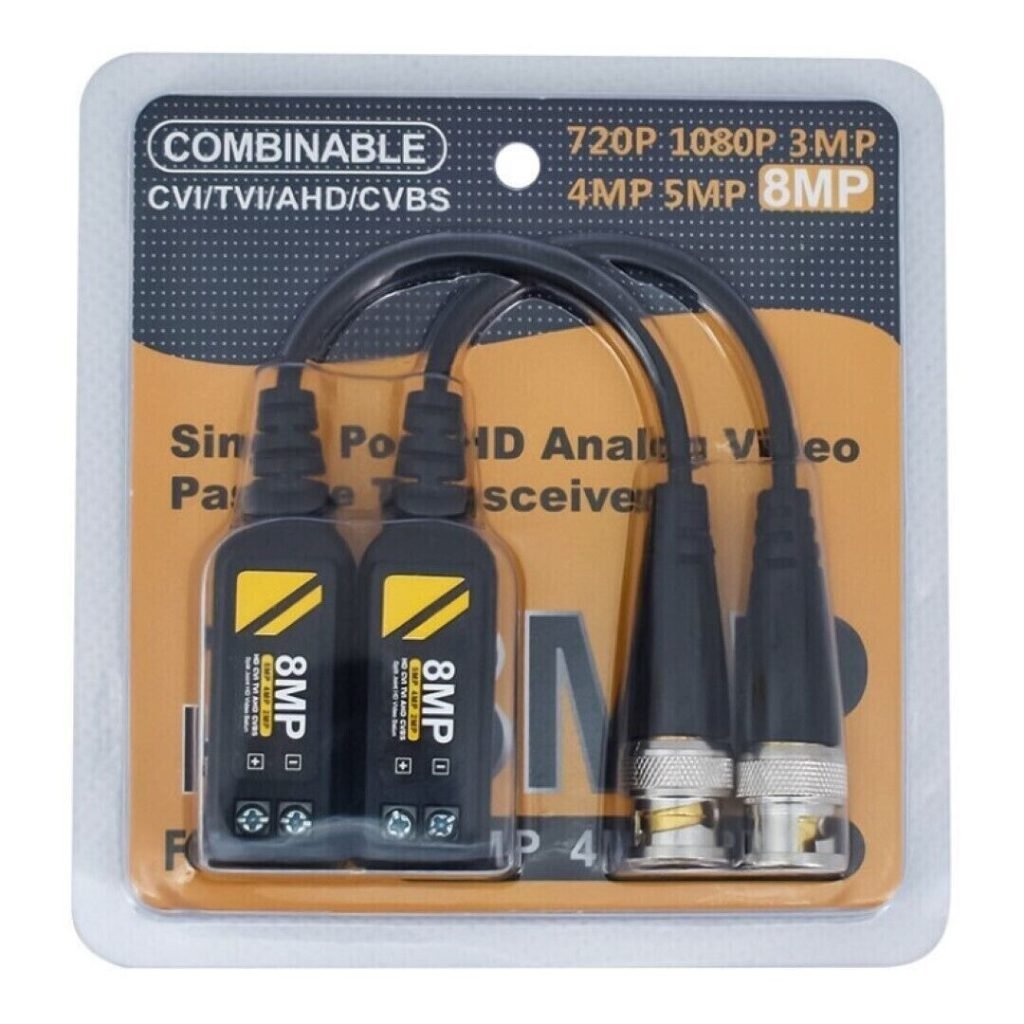
A video balun is a connector or signal adapter used in CCTV systems to transmit video signals over twisted-pair network cables such as Cat5 or Cat6 instead of coaxial cables.
The term “balun” comes from the words “balanced” and “unbalanced”. Its main job is to convert an unbalanced video signal (from coaxial cable) into a balanced signal suitable for twisted-pair cable.
This conversion allows security camera signals to travel farther and more efficiently.
A video balun works by converting and transmitting the video signal in a way that reduces interference and allows it to travel through network cables.
Camera Signal Output
The CCTV camera produces a video signal that normally travels through a coaxial cable (BNC connection).
Signal Conversion
The first balun converts the unbalanced coax signal (75 ohms) into a balanced signal suitable for twisted-pair cables (around 100 ohms).
Transmission Through Cat5/Cat6 Cable
The balanced signal travels through a UTP cable, which is cheaper, easier to install, and resistant to interference.
Signal Conversion Back to Coax
At the DVR or recorder end, a second balun converts the signal back into an unbalanced coax format so the recording equipment can read it.
Connection flow:
Camera → Balun → Cat5/Cat6 cable → Balun → DVR/NVR
Because of this setup, video baluns always work in pairs.
Video baluns became popular because they simplify CCTV installations.
Cat5 or Cat6 cable is usually cheaper and easier to run than coaxial cable, reducing overall installation costs.
Balanced signals can travel longer distances without degrading compared to traditional coax connections.
One Cat5e cable can support multiple cameras using different twisted pairs, making cable management easier.
Twisted-pair wiring naturally helps reduce electromagnetic interference.
There are two main types used in surveillance systems.
Do not require power
Ideal for shorter distances
Simple plug-and-play installation
Passive baluns typically transmit video up to several hundred metres depending on resolution and cable quality.
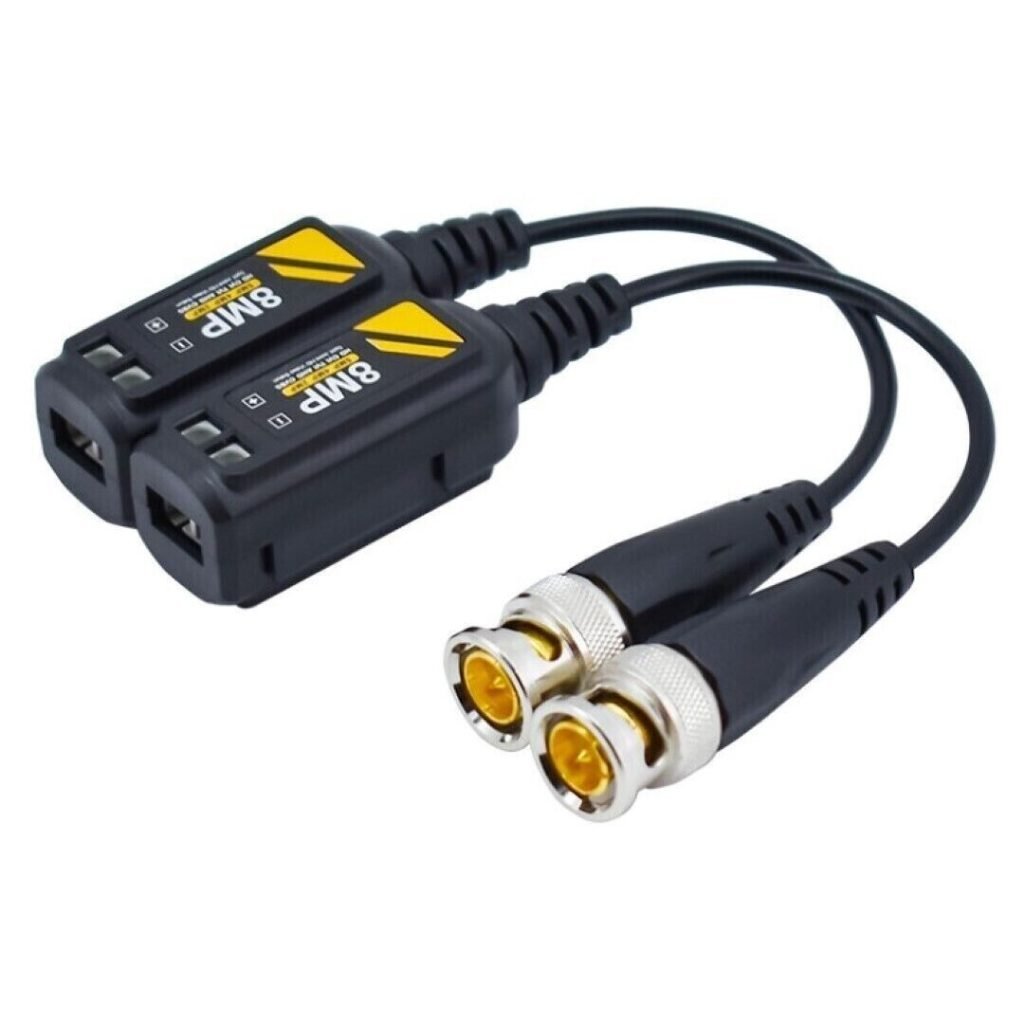
Require power
Include signal amplification
Used for long-distance video transmission
Active baluns can transmit signals much farther than passive ones.
Yes. Modern video baluns support multiple analogue HD camera formats, including:
HD-TVI
AHD
HD-CVI
CVBS (standard analog)
These formats allow high-definition CCTV signals to travel through network cables with minimal loss.
Using video baluns in a CCTV system offers several practical benefits:
Cost-effective cabling
Easier installation and cable routing
Reduced interference
Longer transmission distances
Ability to reuse existing network cables
For installers and businesses, these advantages often translate into faster installations and lower infrastructure costs.
Video baluns are commonly used in:
Security camera installations
Retail and warehouse surveillance systems
Office and commercial CCTV setups
Large buildings with long cable runs
They are especially useful when existing Cat5 or Cat6 network cabling is already installed.
Video baluns are ideal when:
You want to use Cat5/Cat6 cables instead of coax
The camera distance is long
You want to reduce installation costs
You need flexible structured cabling
However, they are not used for IP cameras, which already communicate through Ethernet networks.
A video balun converts an unbalanced CCTV video signal into a balanced signal, allowing it to travel through twisted-pair cables like Cat5 or Cat6.
Passive video baluns do not require power, while active baluns need external power to amplify signals.
Yes. Video baluns work in pairs—one at the camera and one at the DVR or recorder.
Some models support video and power transmission in the same cable, but standard baluns usually transmit only video.
So, how does a video balun work? In simple terms, it converts and balances CCTV signals so they can travel efficiently through network cables instead of coaxial cables. This small device makes surveillance installations more flexible, affordable, and scalable.
Whether you’re installing cameras in a home, office, or large commercial property, video baluns remain one of the easiest ways to simplify CCTV cabling while maintaining reliable video transmission.
Ethernet cables are of various types (Cat6, Cat6A, Cat7, Cat8, etc.): the performance depends on the type. Each cable contains 4 pairs of twisted copper
A CCTV (Closed-Circuit Television) security system has five main hardware components that work together to capture, transmit, display, and store video. In simple terms, these

Are you tired of your big TV stand taking up too much space in your home? If yes, then TV brackets for wall mount is